When a complaint arrives or a regulator asks a question, someone in your operations team needs to find out exactly what happened in a customer interaction; quickly, accurately, and with evidence to back it up. For most insurance contact centres, that process is harder than it should be. Not because the information doesn't exist, but because it isn't captured in a way that makes it easy to use.
This piece looks at why that gap exists, what it's costing operations teams, and what genuinely better record-keeping looks like in practice.
This piece looks at why that gap exists, what it's costing operations teams, and what genuinely better record-keeping looks like in practice.
The problem with 'we have the recording'
On paper, most contact centres are well covered. There's a call recording. There's a CRM entry. There may even be a case note. The assumption is that between those three things, you can reconstruct what happened.
In practice, they rarely tell the same story and often none of them tells the complete one.
Call recordings capture everything that was said, but they can only be consumed in real time. Finding the moment where a renewal price was explained, or where a customer mentioned a health condition, means listening through potentially thirty minutes of audio. CRM notes capture what the agent chose to log, which varies enormously depending on the individual, their workload, and how the call ended. Case notes, whether they exist at all, are frequently written from memory, sometimes hours after the call closed.
Reconciling all of that into a coherent, evidenced account of what happened takes time. For a single interaction, it might be thirty minutes. Across a caseload of complaints or an audit sample, it compounds quickly and the caseload is not small. The Financial Ombudsman Service received over 45,600 new insurance complaints in 2024/25 alone. That figure represents only the cases that escalated as far as the ombudsman; for every FOS referral, there are considerably more handled internally, each demanding the same manual reconstruction effort.
In practice, they rarely tell the same story and often none of them tells the complete one.
Call recordings capture everything that was said, but they can only be consumed in real time. Finding the moment where a renewal price was explained, or where a customer mentioned a health condition, means listening through potentially thirty minutes of audio. CRM notes capture what the agent chose to log, which varies enormously depending on the individual, their workload, and how the call ended. Case notes, whether they exist at all, are frequently written from memory, sometimes hours after the call closed.
Reconciling all of that into a coherent, evidenced account of what happened takes time. For a single interaction, it might be thirty minutes. Across a caseload of complaints or an audit sample, it compounds quickly and the caseload is not small. The Financial Ombudsman Service received over 45,600 new insurance complaints in 2024/25 alone. That figure represents only the cases that escalated as far as the ombudsman; for every FOS referral, there are considerably more handled internally, each demanding the same manual reconstruction effort.
Three things that make it worse
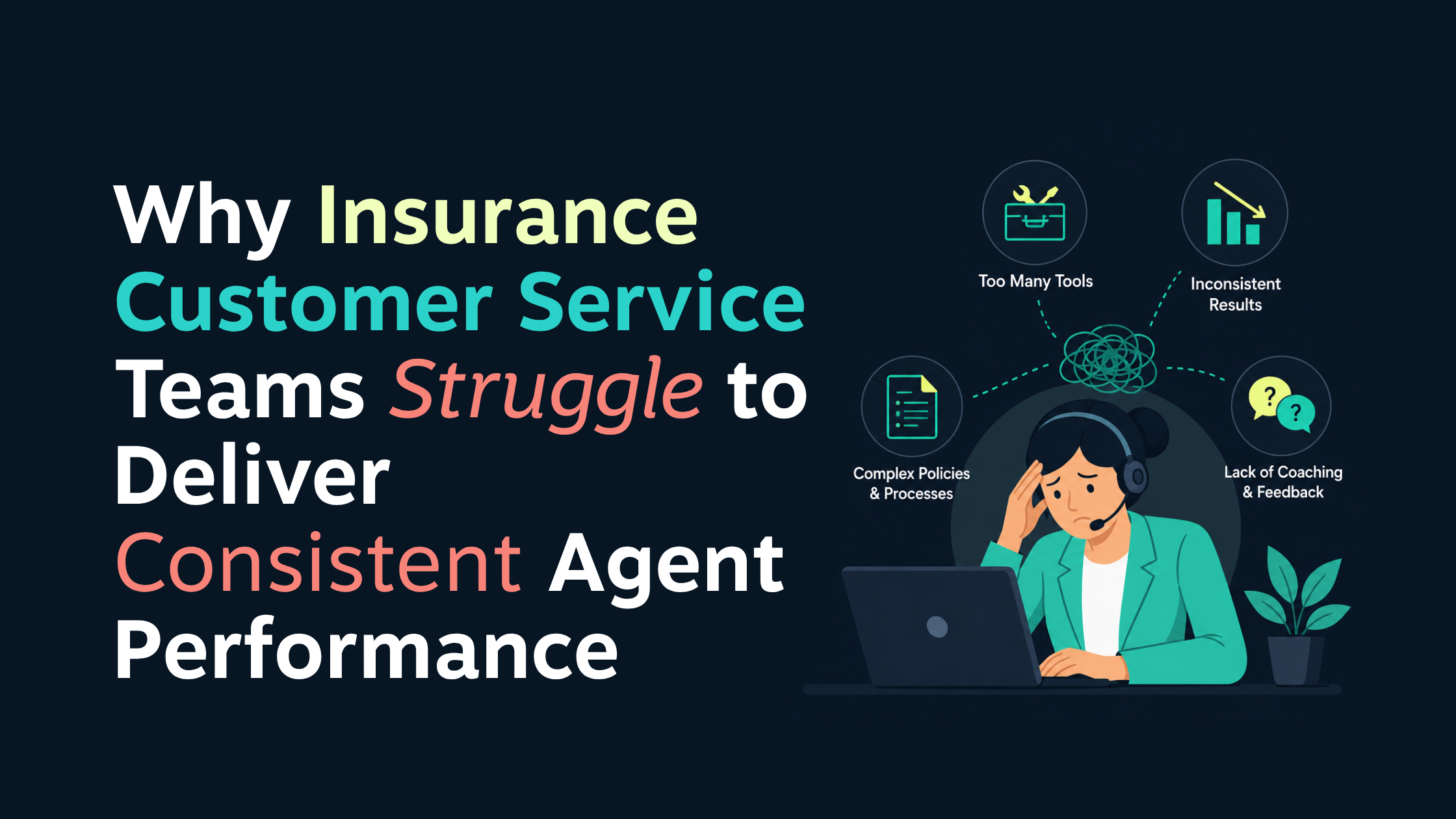
The burden doesn't come from one place. It builds from several compounding problems that most teams have quietly accepted as the cost of doing business.
The first is inconsistency in how calls are documented. There's rarely a firm standard for what a post-call note should contain, so records vary wildly, one agent writes two lines, another writes a paragraph, one logs the outcome, another logs the conversation. All of it ends up in the CRM, none of it structured in the same way, and every retrieval exercise requires someone to interpret what they're reading rather than simply read it.
The second is the gap between what was said and what gets recorded. An agent finishing a fifteen-minute call has, in many centres, around two minutes of wrap time before the next call arrives. What they can write in that window is inevitably a compressed, selective version of the conversation. Key disclosures, moments of customer confusion, vulnerability signals, verbal commitments, these are exactly the things that matter most for compliance and complaints, and they are precisely what tends not to make it into the CRM.
The third is retrieval. Even where good notes exist, pulling them up quickly across legacy systems, multiple platforms, or high call volumes is rarely straightforward. Before operations teams can start the actual work of handling a complaint or preparing for an audit, they're already spending time just assembling the picture.
The first is inconsistency in how calls are documented. There's rarely a firm standard for what a post-call note should contain, so records vary wildly, one agent writes two lines, another writes a paragraph, one logs the outcome, another logs the conversation. All of it ends up in the CRM, none of it structured in the same way, and every retrieval exercise requires someone to interpret what they're reading rather than simply read it.
The second is the gap between what was said and what gets recorded. An agent finishing a fifteen-minute call has, in many centres, around two minutes of wrap time before the next call arrives. What they can write in that window is inevitably a compressed, selective version of the conversation. Key disclosures, moments of customer confusion, vulnerability signals, verbal commitments, these are exactly the things that matter most for compliance and complaints, and they are precisely what tends not to make it into the CRM.
The third is retrieval. Even where good notes exist, pulling them up quickly across legacy systems, multiple platforms, or high call volumes is rarely straightforward. Before operations teams can start the actual work of handling a complaint or preparing for an audit, they're already spending time just assembling the picture.
Why Consumer Duty makes this urgent
The FCA's Consumer Duty has changed what 'good record-keeping' means for insurance firms. It's no longer enough to act in customers' interests firms must be able to demonstrate that they did. That distinction matters, because demonstration requires structured, retrievable evidence of what was said, how it was communicated, and whether the customer understood.
A CRM note reading 'customer happy, policy renewed' doesn't come close to meeting that standard. Nor does pointing to a call recording that no one has reviewed. What the Duty expects is the ability to produce a clear account of any given interaction the kind of account that shows the right information was given, in the right way, at the right time.
The complaints data underlines the risk of getting this wrong. According to Insurance DataLab, the FOS currently upholds more than a third of insurance complaints it investigates. A significant proportion of those upheld cases come down, at least in part, to insurers being unable to demonstrate what their agents actually said. If the record doesn't show it, the presumption tends to favour the customer and rightly so under the Duty's framework.
Firms have eight weeks to resolve a complaint once it's received. When operations teams are spending the first two or three of those weeks piecing together what happened in the original call, that timeline becomes very tight very quickly.
A CRM note reading 'customer happy, policy renewed' doesn't come close to meeting that standard. Nor does pointing to a call recording that no one has reviewed. What the Duty expects is the ability to produce a clear account of any given interaction the kind of account that shows the right information was given, in the right way, at the right time.
The complaints data underlines the risk of getting this wrong. According to Insurance DataLab, the FOS currently upholds more than a third of insurance complaints it investigates. A significant proportion of those upheld cases come down, at least in part, to insurers being unable to demonstrate what their agents actually said. If the record doesn't show it, the presumption tends to favour the customer and rightly so under the Duty's framework.
Firms have eight weeks to resolve a complaint once it's received. When operations teams are spending the first two or three of those weeks piecing together what happened in the original call, that timeline becomes very tight very quickly.
The audit blindspot
Quality assurance in most insurance contact centres operates on a sample. Industry benchmarks consistently put manual QA coverage somewhere between one and five percent of total call volume, not because that's considered adequate, but because that's what a QA team can physically get through when every review means listening to a call in real time. In practical terms, that often works out to around four calls per agent per month.
The consequence is that the vast majority of what happens in a contact centre is never reviewed. Issues that would be visible across the full data set: a cluster of agents not raising vulnerability flags, a product consistently generating customer confusion, a compliance gap on a particular script stay hidden because no one has the capacity to look for them.
One industry analysis framed it plainly: a two percent audit rate means ninety-eight percent of your conversations are invisible to quality management. For a regulated insurance contact centre operating under Consumer Duty, that's a significant exposure.
What makes it particularly frustrating is that the data already exists. Every call is recorded. The information is there. The problem is that it's locked inside audio files that take as long to review as the calls themselves took to happen.
The consequence is that the vast majority of what happens in a contact centre is never reviewed. Issues that would be visible across the full data set: a cluster of agents not raising vulnerability flags, a product consistently generating customer confusion, a compliance gap on a particular script stay hidden because no one has the capacity to look for them.
One industry analysis framed it plainly: a two percent audit rate means ninety-eight percent of your conversations are invisible to quality management. For a regulated insurance contact centre operating under Consumer Duty, that's a significant exposure.
What makes it particularly frustrating is that the data already exists. Every call is recorded. The information is there. The problem is that it's locked inside audio files that take as long to review as the calls themselves took to happen.
What better actually looks like
The operational standard that most teams are implicitly working towards, even when they haven't put it in those terms is simple: the ability to answer any reasonable question about a customer interaction within minutes, not hours.
What was the customer told about their excess? Did the agent flag a vulnerability? Was the renewal price explained before the customer agreed? Was there a point in the call where a complaint could have been identified earlier? These questions should be answerable from structured data, not from a listening exercise.
Reaching that standard means changing what the primary record actually is. Right now, in most contact centres, it's the agent's CRM note, a subjective, compressed account written under time pressure. What it needs to be is the conversation itself: captured automatically, in a structured and searchable format, without adding a single extra step to the agent's workflow.
That shift from note-as-record to conversation-as-record is the foundation everything else builds on. Faster complaint resolution. More meaningful QA. Credible Consumer Duty evidence. None of those things are achievable at scale without it.
What was the customer told about their excess? Did the agent flag a vulnerability? Was the renewal price explained before the customer agreed? Was there a point in the call where a complaint could have been identified earlier? These questions should be answerable from structured data, not from a listening exercise.
Reaching that standard means changing what the primary record actually is. Right now, in most contact centres, it's the agent's CRM note, a subjective, compressed account written under time pressure. What it needs to be is the conversation itself: captured automatically, in a structured and searchable format, without adding a single extra step to the agent's workflow.
That shift from note-as-record to conversation-as-record is the foundation everything else builds on. Faster complaint resolution. More meaningful QA. Credible Consumer Duty evidence. None of those things are achievable at scale without it.
Where technology changes the equation
Conversational intelligence platforms like Insights360 exist to make that shift possible. By automatically transcribing and analysing every call, they turn each interaction into a structured, searchable record, one that captures what was said, by whom, and at what point, with no reliance on agent recall or post-call note-taking.
For operations teams, the practical difference is meaningful. Reconstructing an interaction for a complaint or audit no longer means listening back to a recording, it means opening a transcript and summary that already surfaces the key moments. Compliance questions get answered from data. QA coverage expands significantly because the effort per reviewed interaction drops from twenty minutes to a fraction of that.
Perhaps more importantly, it makes pattern-spotting possible in a way that manual sampling never could. When every call is structured data, you can ask questions across the full population: which agent groups are least consistent on vulnerability flags? Which products generate the most customer confusion? Where in the call journey are complaint triggers most commonly appearing? Those are operations questions and they deserve operations-level answers, not guesswork extrapolated from a two percent sample.
For operations teams, the practical difference is meaningful. Reconstructing an interaction for a complaint or audit no longer means listening back to a recording, it means opening a transcript and summary that already surfaces the key moments. Compliance questions get answered from data. QA coverage expands significantly because the effort per reviewed interaction drops from twenty minutes to a fraction of that.
Perhaps more importantly, it makes pattern-spotting possible in a way that manual sampling never could. When every call is structured data, you can ask questions across the full population: which agent groups are least consistent on vulnerability flags? Which products generate the most customer confusion? Where in the call journey are complaint triggers most commonly appearing? Those are operations questions and they deserve operations-level answers, not guesswork extrapolated from a two percent sample.
The hidden costs of long audit processes
The record-keeping burden in insurance contact centres is substantial, but because it's spread across teams and absorbed into the rhythm of daily work, it rarely surfaces as a discrete cost. The hours spent listening back to calls, chasing notes across systems, and manually assembling complaint evidence don't appear on any report. They just disappear into the working day.
That invisibility makes it easy to deprioritise. But the direction of regulatory travel, and a complaints landscape that saw overall FOS volumes rise 40% year-on-year in the first half of 2024, means the pressure on insurance firms to evidence what happened in customer interactions is only going to intensify. Firms with structured, searchable interaction data will handle that pressure differently and more confidently than those still relying on agent notes and listening queues to piece things together.
The information is already there, captured in full, in every call that was recorded. The only question is whether it's being stored in a way that makes it usable when it matters most.
That invisibility makes it easy to deprioritise. But the direction of regulatory travel, and a complaints landscape that saw overall FOS volumes rise 40% year-on-year in the first half of 2024, means the pressure on insurance firms to evidence what happened in customer interactions is only going to intensify. Firms with structured, searchable interaction data will handle that pressure differently and more confidently than those still relying on agent notes and listening queues to piece things together.
The information is already there, captured in full, in every call that was recorded. The only question is whether it's being stored in a way that makes it usable when it matters most.