
Picture a typical morning for an agent on an insurance customer service desk. First call, a customer wants to know why their motor premium went up at renewal. Second call, someone's chasing an update on a claim that's been sitting with an adjuster for two weeks. Third call, a customer wants to add a named driver to their policy but also mentions, almost in passing, that they've just been signed off work with stress. That last detail matters. It's a vulnerability indicator, and under Consumer Duty it needs to be captured properly, not just remembered.
After each of those calls, the agent has to stop, switch out of conversation mode, and write it all up. Who called, what they wanted, what was agreed, what needs to happen next, and anything that flags risk or compliance relevance. Only once that's done can they pick up the next call. This is the bit that rarely shows up in a team's headline metrics, but it eats a huge amount of the working day.
What a day in this role actually involves
Insurance customer service is rarely a single type of query. In one shift an agent might deal with a renewal price query, a mid-term adjustment, a complaint about a declined claim, and a call from someone who's confused about their excess. Each of those needs a different kind of note. A renewal query note might just need the outcome. A complaint needs a clear account of what was said, in the customer's words where possible, because it may end up in front of the Financial Ombudsman Service if it escalates. A vulnerability disclosure needs to be flagged in a way that other teams can see and act on later, not buried in a paragraph of general commentary.
Doing this well, every time, across sixty or more calls a day, is a lot to ask of anyone. And it's not just about ticking a box. Insurers are expected to show that outcomes are consistently good for customers, not just on the calls that happen to get audited.
Why the wrap-up takes as long as it does
The actual writing isn't usually the slow part. It's the recall. By the time an agent finishes a call and opens the notes field, they're trying to reconstruct a conversation from memory, often while the next call is already queuing. Details blur. The exact wording a customer used when raising a concern gets replaced with a general summary. A vulnerability mentioned briefly halfway through the call doesn't make it into the final note because the agent is now focused on wrapping up quickly rather than reviewing what was said.
This is how notes drift toward vague phrases like "customer called about policy, advised accordingly." Not because agents don't care, but because accurately summarising a conversation from memory, under time pressure, again and again, all day, is genuinely hard.
What this costs beyond the obvious
The most visible cost is capacity. Every minute spent on wrap-up is a minute not spent with the next customer, and across a team of any size that adds up to real hours lost every day. But there are quieter costs too. When notes are inconsistent, the next person to pick up that customer's file, whether a colleague, a claims handler, or the same agent months later at renewal, doesn't get the full picture. A vulnerability that was disclosed but poorly recorded might never be acted on. A complaint that wasn't logged clearly becomes harder to defend if it reaches the Ombudsman.
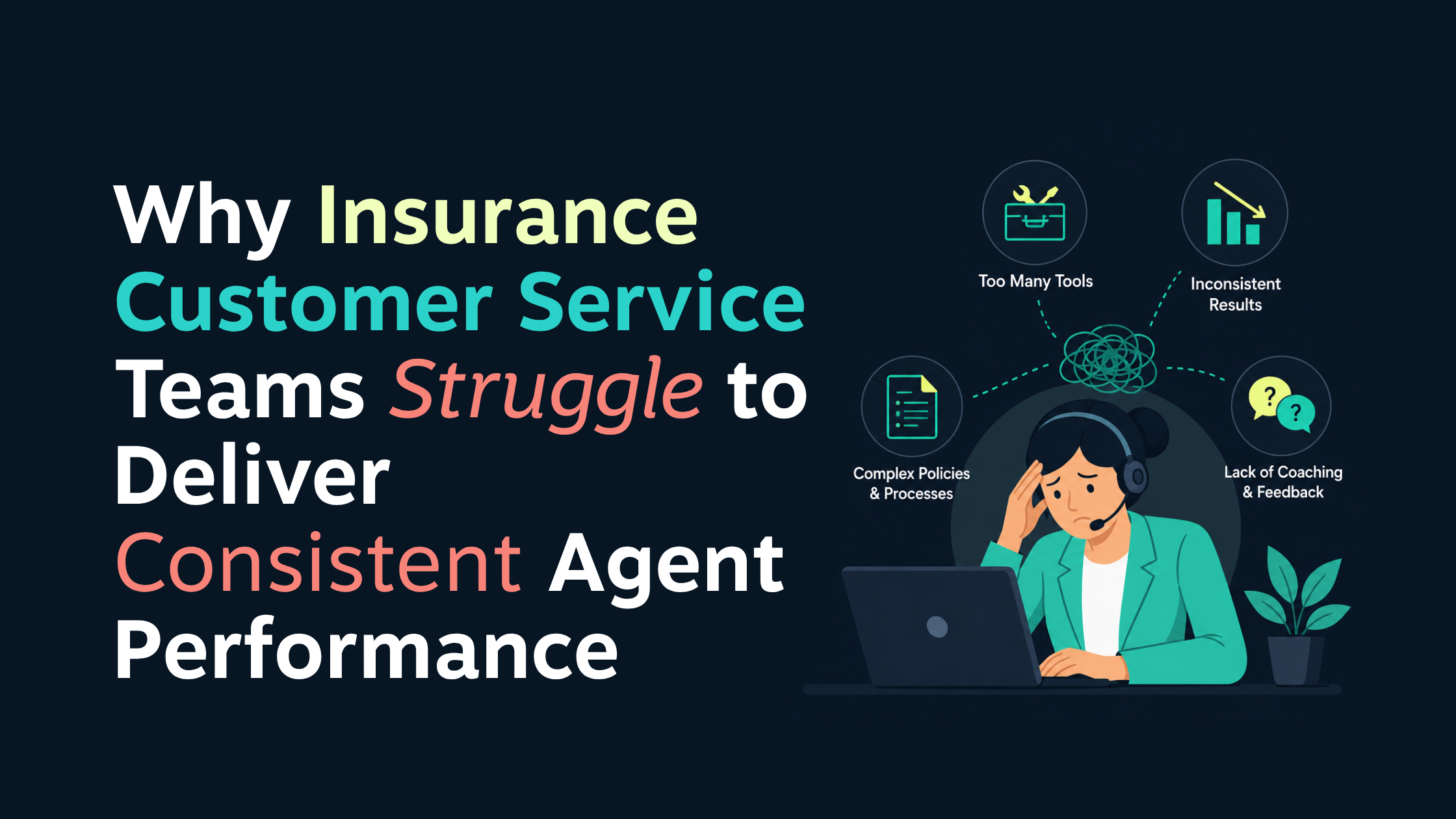
There's also a toll on the agents themselves. Most people take a customer service role in insurance because they want to help people through what's often a stressful moment, a claim, an accident, a bereavement. Spending a large part of the day on manual admin instead pulls them away from that, and it's a common factor behind burnout and turnover in these teams.
The knock-on effect on customer experience
When wrap-up time creeps up, something has to give. Either hold queues lengthen, or agents start cutting corners on notes to keep pace. Neither is good. Rushed notes mean the next person who picks up the file, whether that's a colleague, a claims handler, or the same agent three weeks later, doesn't get the full picture. Details about a customer's circumstances get lost. A vulnerability flagged verbally on the call never makes it into the record. That's a real risk when FCA expectations under Consumer Duty are about consistently good outcomes, not just what was said in the moment.
There's also a quieter cost to morale. Agents who joined the job to help people often find themselves spending a disproportionate part of their day on data entry. It's one of the more common reasons cited for burnout and turnover in contact centre roles, something we've touched on before when looking at agent performance consistency under pressure.
How this is starting to change
A growing number of insurance contact centres are looking at how conversation intelligence can take on the first draft of this work. Rather than an agent reconstructing a call from memory after it ends, the call itself is analysed as it happens, picking up what was discussed, flagging vulnerability language, and drafting a structured summary automatically. The agent's job shifts from writing notes from scratch to reviewing and adding anything the system might have missed, which takes a fraction of the time and tends to be more accurate, since nothing depends on memory under pressure.
How Insights360 approaches this specifically
This is the exact gap Insights360 was built to close for insurance contact centre teams. Rather than treating the call and the note as two separate tasks, one spoken and one written up afterwards from memory, Insights360 listens to the conversation itself and builds the summary from what was actually said, not from what an agent manages to recall a few minutes later.
In practice, that means a claims update call gets a draft note covering what the customer asked, what was checked, and what was agreed, ready for the agent to glance over and confirm rather than write from a blank field. If a customer mentions something like a bereavement, a job loss, or a health change partway through an unrelated call, Insights360 is built to pick that up as a vulnerability indicator and surface it clearly, rather than leaving it dependent on the agent remembering to mention it once the call has ended and they're already moving on to the next one. The same applies to complaints. Where a customer raises a concern, the summary reflects the substance of what was said rather than a generic line, which matters if that file is ever reviewed internally or referred externally.
Because the summary is generated consistently, in the same structure, call after call, it also takes pressure off quality teams who would otherwise be sampling a small fraction of calls to spot gaps. And because agents are reviewing a draft rather than composing one from scratch, the minutes that used to disappear into wrap-up are largely given back, which means more capacity for the next customer without asking agents to rush.
What good practice looks like either way
Whether or not a team has this kind of tooling in place, a few habits help. Agreeing what a "good note" actually contains, rather than leaving it to individual style, makes a real difference to consistency. Giving agents even a short amount of protected wrap-up time between calls, rather than expecting it to happen while the next call is already ringing, tends to improve accuracy more than it costs in throughput. And sampling notes regularly for quality, not just for compliance sign-off, helps managers see where agents are running out of time rather than running out of care.
Post-call wrap-up rarely gets the attention that call handling itself does, but it shapes almost everything that happens afterwards, from how well a complaint holds up on review to how prepared the next person is when that customer calls back. Getting it right isn't about pushing agents to work faster. It's about giving them back the time, and the tools, to do it properly the first time.
Post-call wrap-up rarely gets the attention that call handling itself does, but it shapes almost everything that happens afterwards, from how well a complaint holds up on review to how prepared the next person is when that customer calls back. Getting it right isn't about pushing agents to work faster. It's about giving them back the time, and the tools, to do it properly the first time.