A management information (MI) pack tells you how much happened: how many calls came in, how many complaints were logged and how many letters went out. It shows volumes. Customer outcomes, meaning how people were treated and whether it worked for them, sit in the conversations behind the numbers.
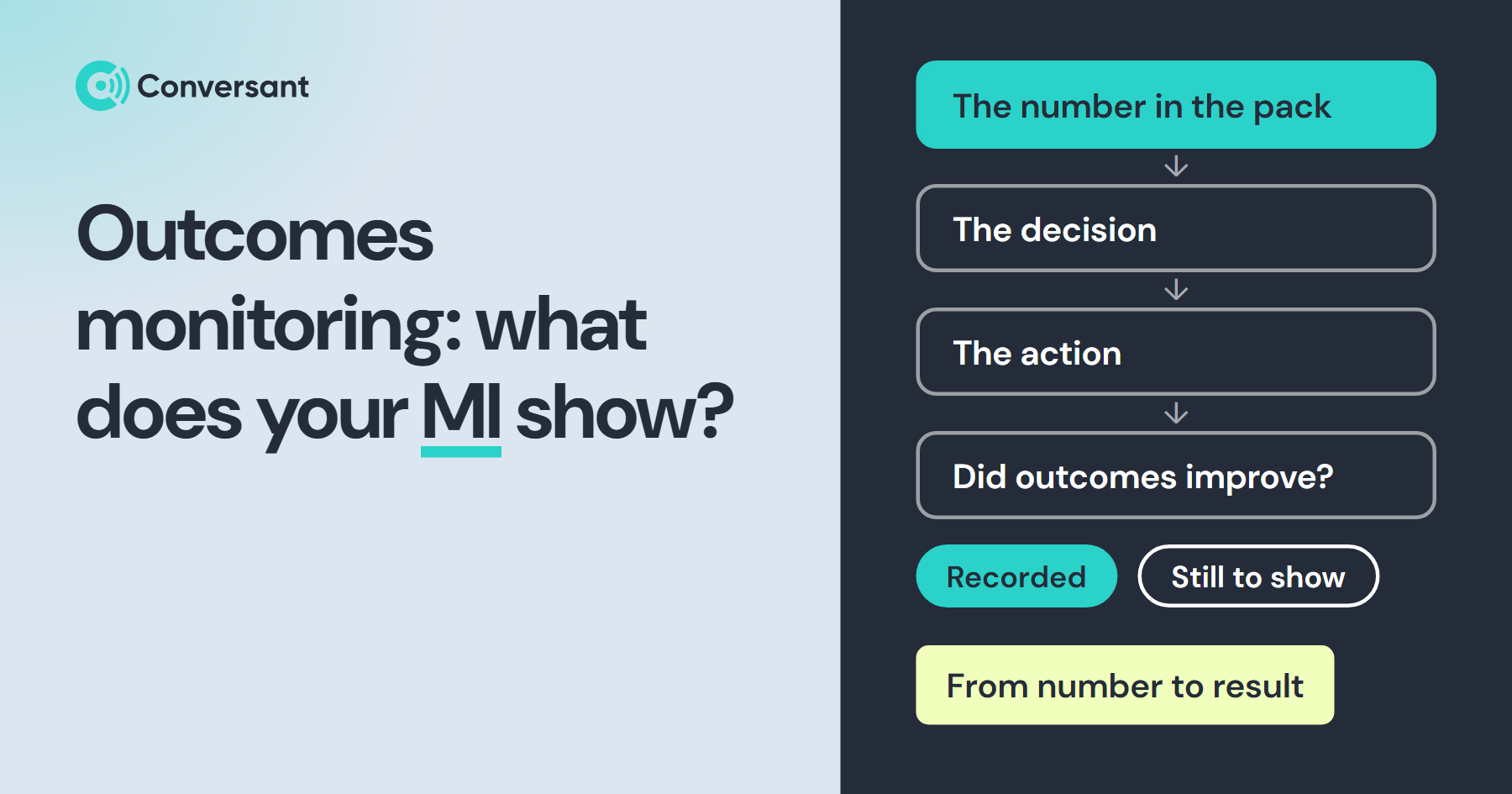
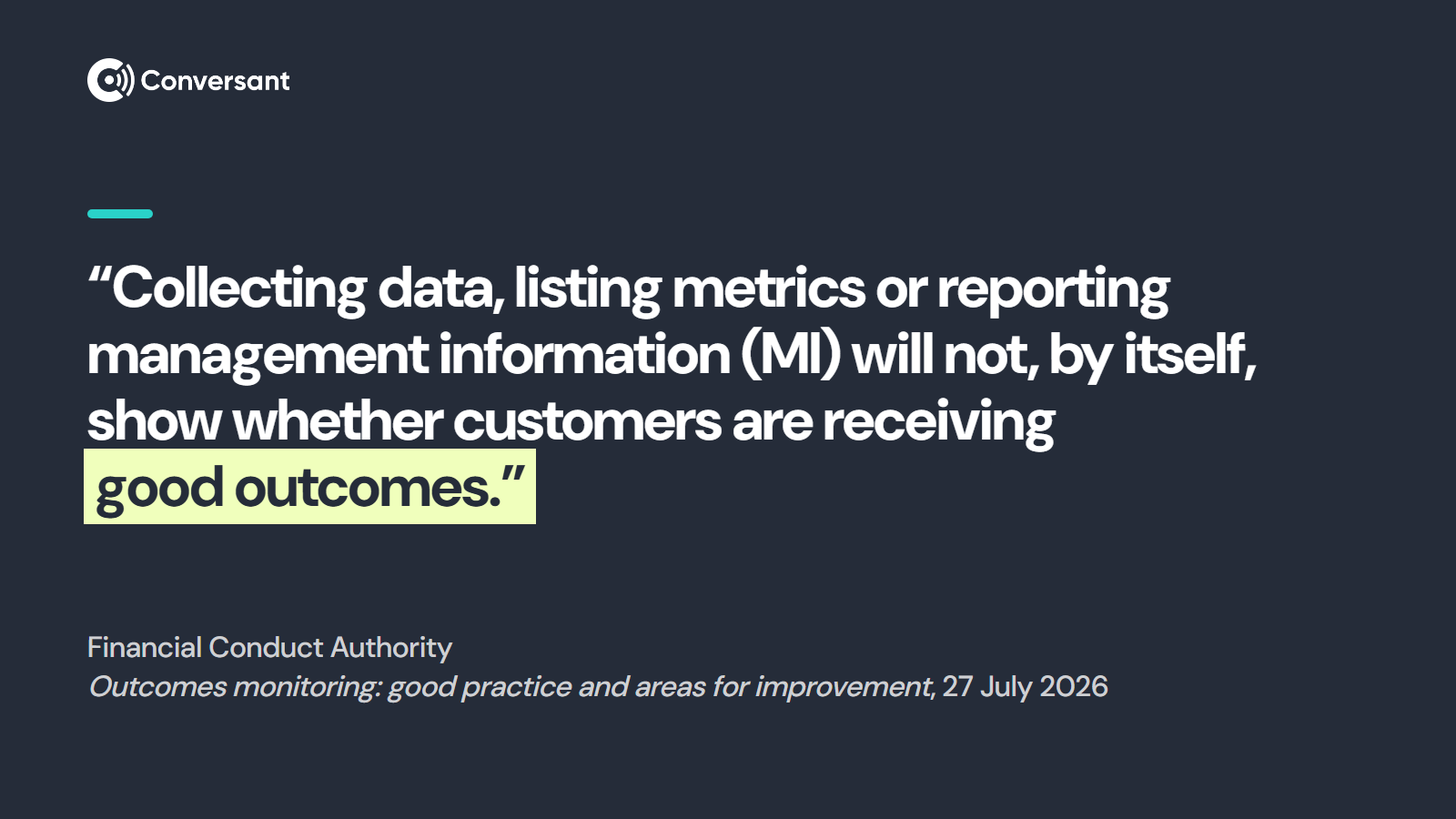
The FCA said so plainly in its outcomes monitoring review, published on 27 July 2026: “Collecting data, listing metrics or reporting management information (MI) will not, by itself, show whether customers are receiving good outcomes.” This article covers customer outcomes and MI: what the FCA said, and one way to put the conversations beside the numbers.
The FCA said so plainly in its outcomes monitoring review, published on 27 July 2026: “Collecting data, listing metrics or reporting management information (MI) will not, by itself, show whether customers are receiving good outcomes.” This article covers customer outcomes and MI: what the FCA said, and one way to put the conversations beside the numbers.
What an MI report can show about customer outcomes
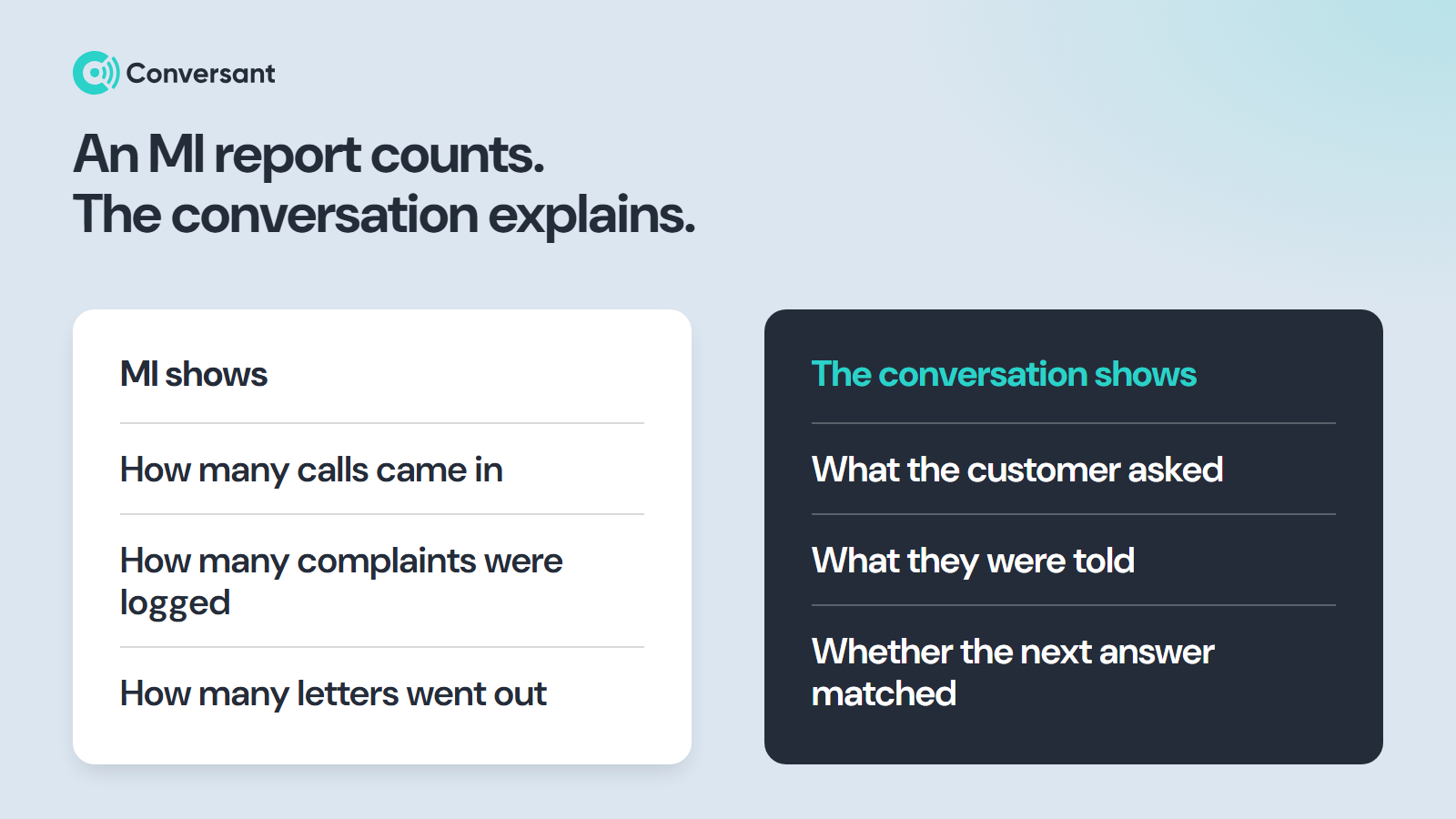
An MI report counts things: calls handled, complaints logged, average handling time, letters sent. Each number is useful, and each one describes volume or speed.
Say your complaint count falls next quarter. It could mean you fixed something. It could mean fewer customers got in touch, or that a backlog is waiting to be logged. The total cannot separate those readings, and a chart of the total over time cannot either.
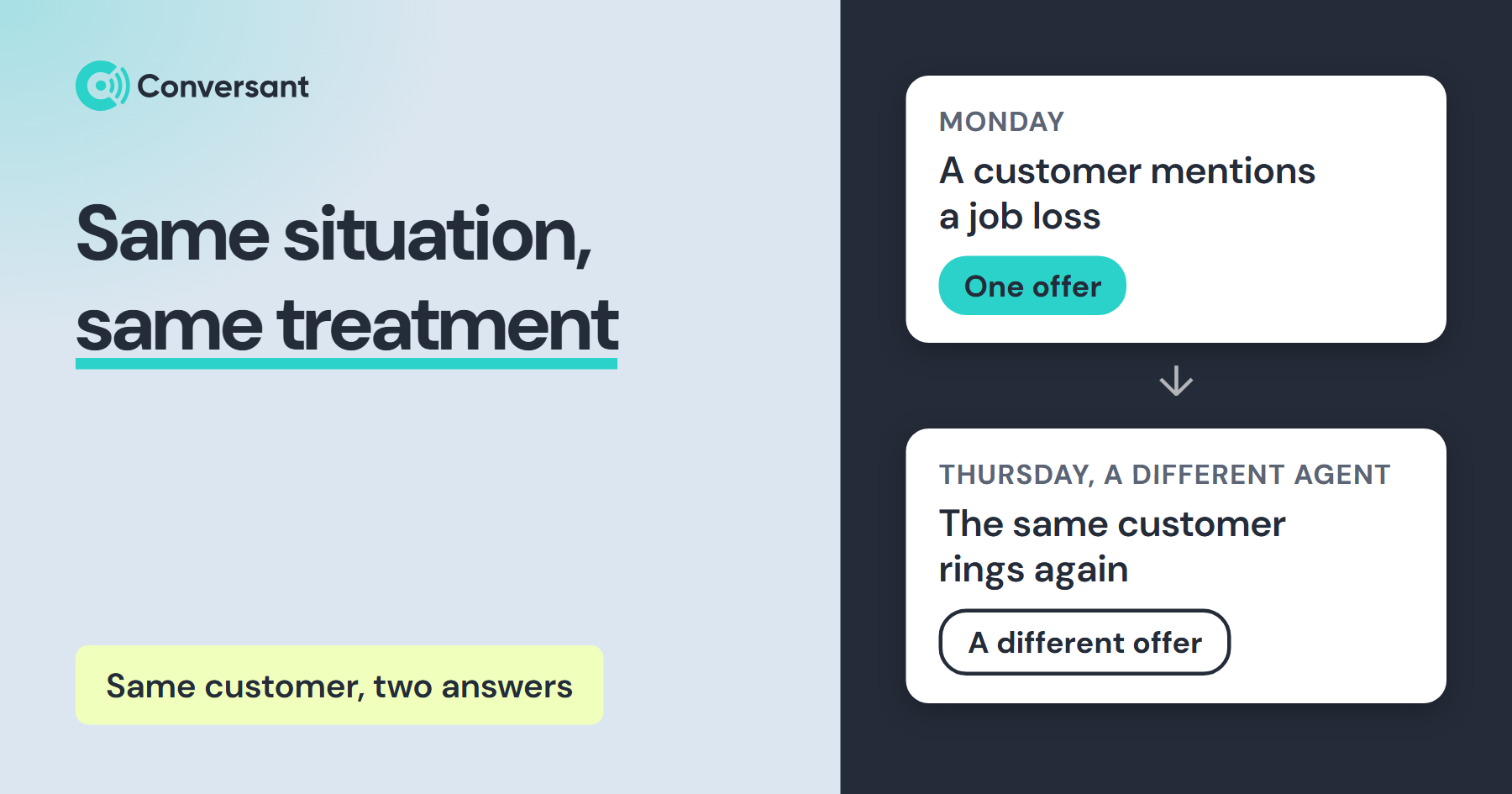
What is missing is the conversation: what the customer asked, what they were told, and whether the next person they spoke to gave the same answer.
Say your complaint count falls next quarter. It could mean you fixed something. It could mean fewer customers got in touch, or that a backlog is waiting to be logged. The total cannot separate those readings, and a chart of the total over time cannot either.
What is missing is the conversation: what the customer asked, what they were told, and whether the next person they spoke to gave the same answer.
What the FCA’s outcomes monitoring review asks for
The review gives examples of good practice and areas for improvement. Four of its points bear directly on MI:
- It lists “No evidence of how MI leads to decisions and improved outcomes” as an area for improvement, and describes a firm that could not show what MI it considered, challenged or decided.
- It also lists “Actions are taken, but firms do not explain why or whether they worked”.
- It says evidence was stronger where firms tested whether interventions reduced repeat contact.
- In its examples for smaller firms, it says: “A new tool or checklist, by itself, does not necessarily show that customer outcomes have improved.”
Read together, these point to more than a report. They point to what the MI showed, what you decided and whether it worked. The review gives examples, and how it applies to your firm is a question for your own compliance team.
Put the conversations beside the numbers
Here is one way to do it, as a single page added to the board pack. For each conversation type that carries risk, such as arrears, forbearance or a client review, show:
1
The volume, from your usual MI.
2
What ten recent conversations showed, with one line each on what the customer asked and what they were told.
3
What you decided to change, and who owns it.
4
Whether repeat contact fell afterwards.
5
What you could not see.
Write each line as the moment itself, in the customer’s words, so a board member can picture it.
The fifth line is the one to watch. If reaching the conversations is slow because recordings, notes and letters sit in different places, that is a finding in itself, and it will slow every review you run after this one.
The fifth line is the one to watch. If reaching the conversations is slow because recordings, notes and letters sit in different places, that is a finding in itself, and it will slow every review you run after this one.
Why the sample matters for customer outcomes
In its consumer support review, the FCA reported that “13% of firms we surveyed told us that they don’t carry out any quality assurance on the support channels they offer” (published March 2025, updated July 2026). Where nobody reviews conversations, MI is the whole picture.
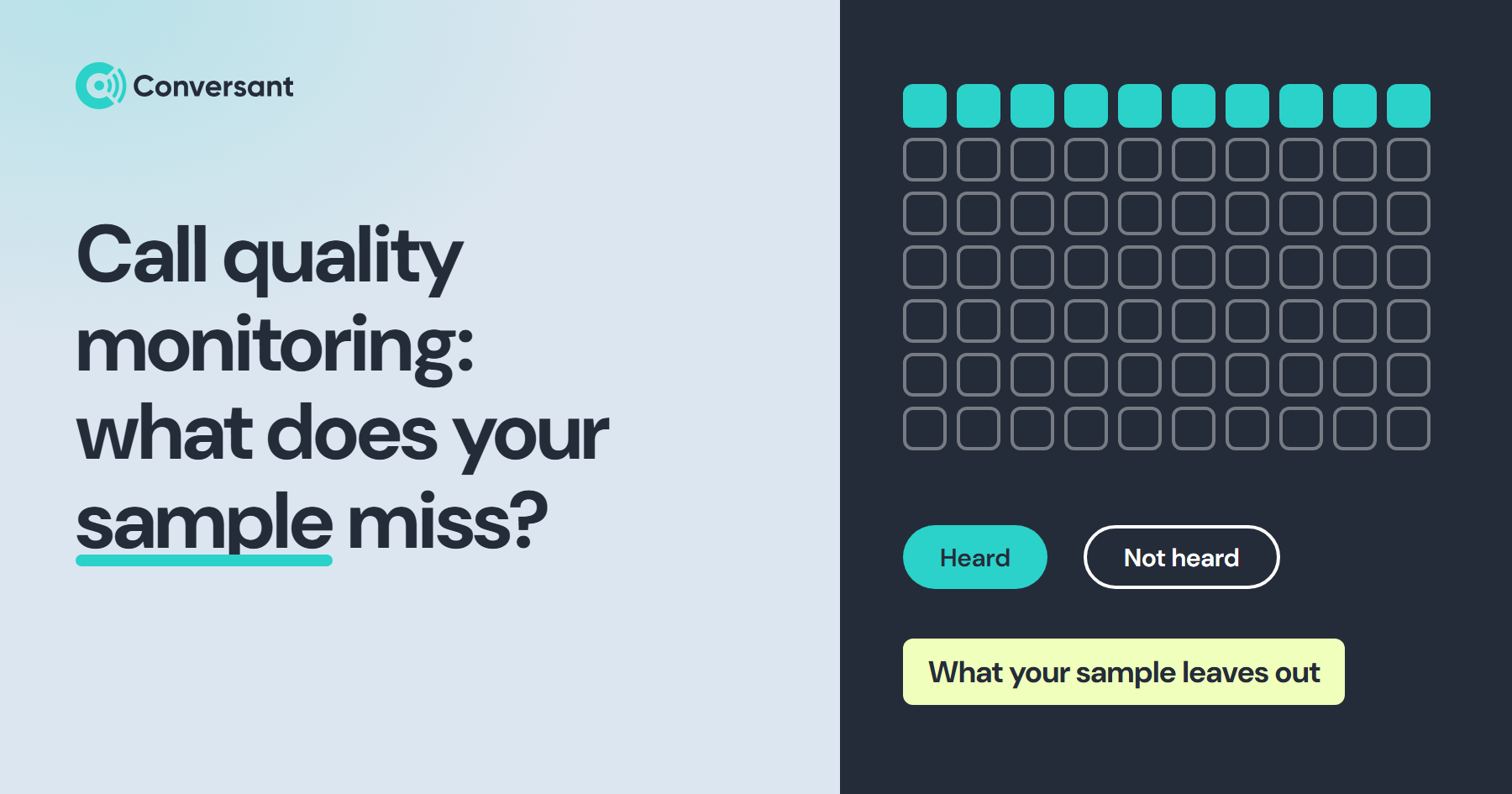
Where some conversations are reviewed, the question is how they are picked. A sample chosen by call length, or by who put the calls forward, shows you those calls. Picking across the conversation types that carry the most risk, and across teams, gives the board a fairer picture.
Where some conversations are reviewed, the question is how they are picked. A sample chosen by call length, or by who put the calls forward, shows you those calls. Picking across the conversation types that carry the most risk, and across teams, gives the board a fairer picture.
The limits of this approach
Ten conversations show what happened in those ten, and they cannot stand in for every conversation. The approach covers what you can see in a conversation, so it will miss harm that starts elsewhere, such as in how a product is designed or priced. The right format for your board is a decision for your own governance and compliance teams.
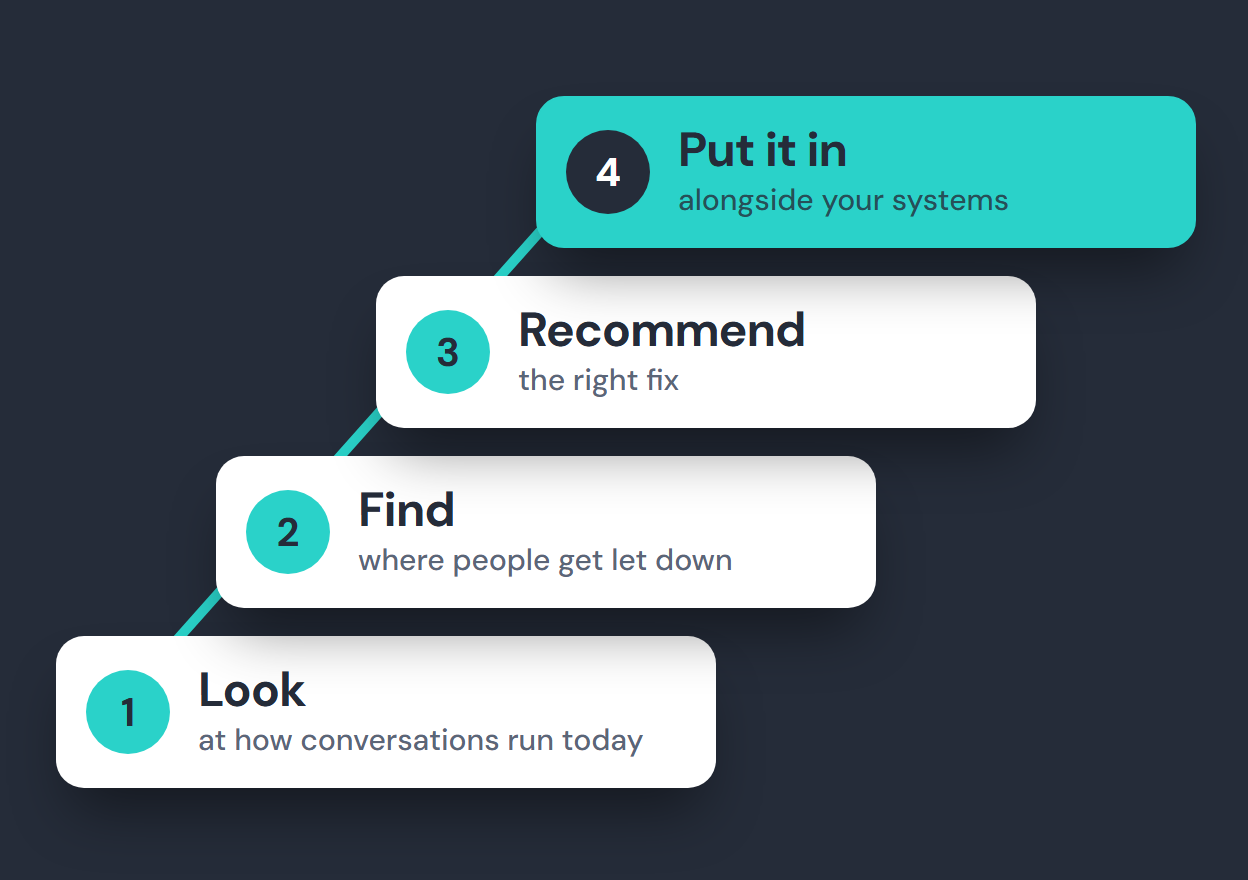
We help firms see what’s really happening across their customer conversations, so problems show up early. If you’re working out what your MI leaves out, we’re happy to talk it through.
We help firms see what’s really happening across their customer conversations, so problems show up early. If you’re working out what your MI leaves out, we’re happy to talk it through.