AI is taking your people's jobs. Yes, that's clickbait. It's also the headline everywhere, and your team have definitely read it, whether that's in articles, papers or the news.
AI adoption depends on how they react to that headline more than on the technology. If your people think a tool is there to replace them, they'll keep away from it, and AI only works if your people use it. So the first job in an AI plan is to be clear about what the tool is for, and to give your team a reason to want it.
AI adoption depends on how they react to that headline more than on the technology. If your people think a tool is there to replace them, they'll keep away from it, and AI only works if your people use it. So the first job in an AI plan is to be clear about what the tool is for, and to give your team a reason to want it.
Are employees worried that AI will take their jobs?
Enough of them to plan around. In a July 2025 TUC poll by Survation of 2,605 UK adults, 51% said they were concerned about the impact of AI and new technologies on their job. The TUC reported that job losses or changes to terms and conditions were the most commonly cited concern, and that the figure rose to 62% among workers aged 25-34.
51%
of UK adults polled are concerned about AI's impact on their job
TUC / Survation, July 2025 poll (issued 27 Aug 2025), 2,605 adults
62%
of workers aged 25-34 said the same
TUC / Survation, 2025
50%
say workers and unions should have an equal say with business on shaping AI. 17% opposed
TUC / Survation, 2025
People want to be asked, which is a good reason to ask them. It's a poll of the general public, so it can't tell you what your own team thinks. Asking them will.
Why does AI adoption stall when the tool is good?
Because buying a tool and getting people to use it are two separate jobs. The Bank of England and FCA's 2024 survey of AI in UK financial services found 75% of responding firms were already using AI, with a further 10% planning to over the next three years. In the same survey, 46% of respondent firms reported only a partial understanding of the AI technologies they use, against 34% who said they had complete understanding. There were 118 responses.
On the employee side, Gallup's survey of 23,068 US employees, fielded on 5-19 August 2025, found that using AI at work at least a few times a year increased from 40% to 45%, and frequent use (a few times a week or more) from 19% to 23%. Gallup also reported that 23% of employees chose "don't know" when asked whether their organisation had implemented AI, and that employees further from organisational decision-making had been less aware of AI implementation.
On the employee side, Gallup's survey of 23,068 US employees, fielded on 5-19 August 2025, found that using AI at work at least a few times a year increased from 40% to 45%, and frequent use (a few times a week or more) from 19% to 23%. Gallup also reported that 23% of employees chose "don't know" when asked whether their organisation had implemented AI, and that employees further from organisational decision-making had been less aware of AI implementation.
75%
of responding UK financial services firms already use AI, with a further 10% planning to over the next three years
Bank of England and FCA, 21 Nov 2024, 118 responses
46%
of respondent firms reported only a partial understanding of the AI they use, against 34% with complete understanding
Bank of England and FCA, 21 Nov 2024
45%
of US employees use AI at work at least a few times a year, up from 40%. Frequent use rose from 19% to 23%
Gallup, fielded 5-19 Aug 2025, 23,068 US employees
These are different groups, UK firms and US employees, so we wouldn't add them together. What they point to is a question for your own team: if a tool is already in place, do the people it was bought for know what it's for?
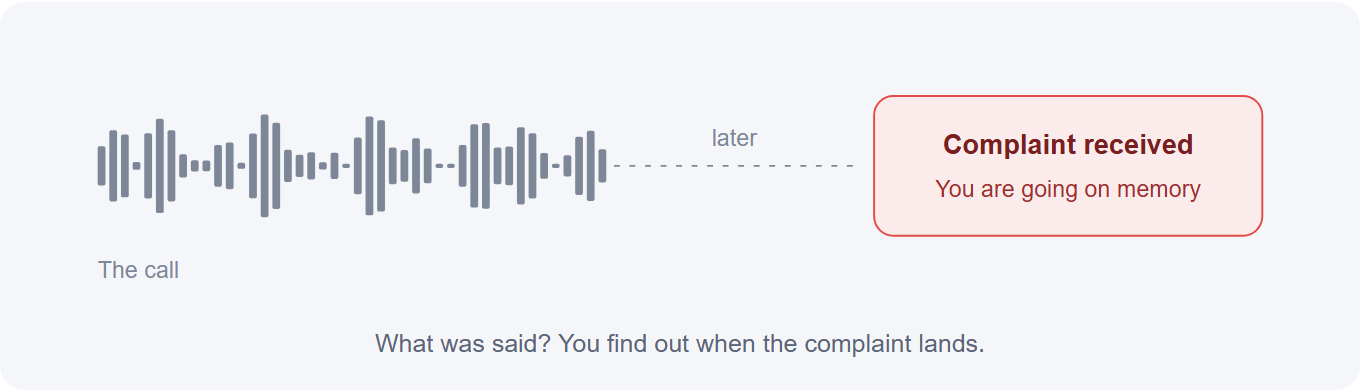
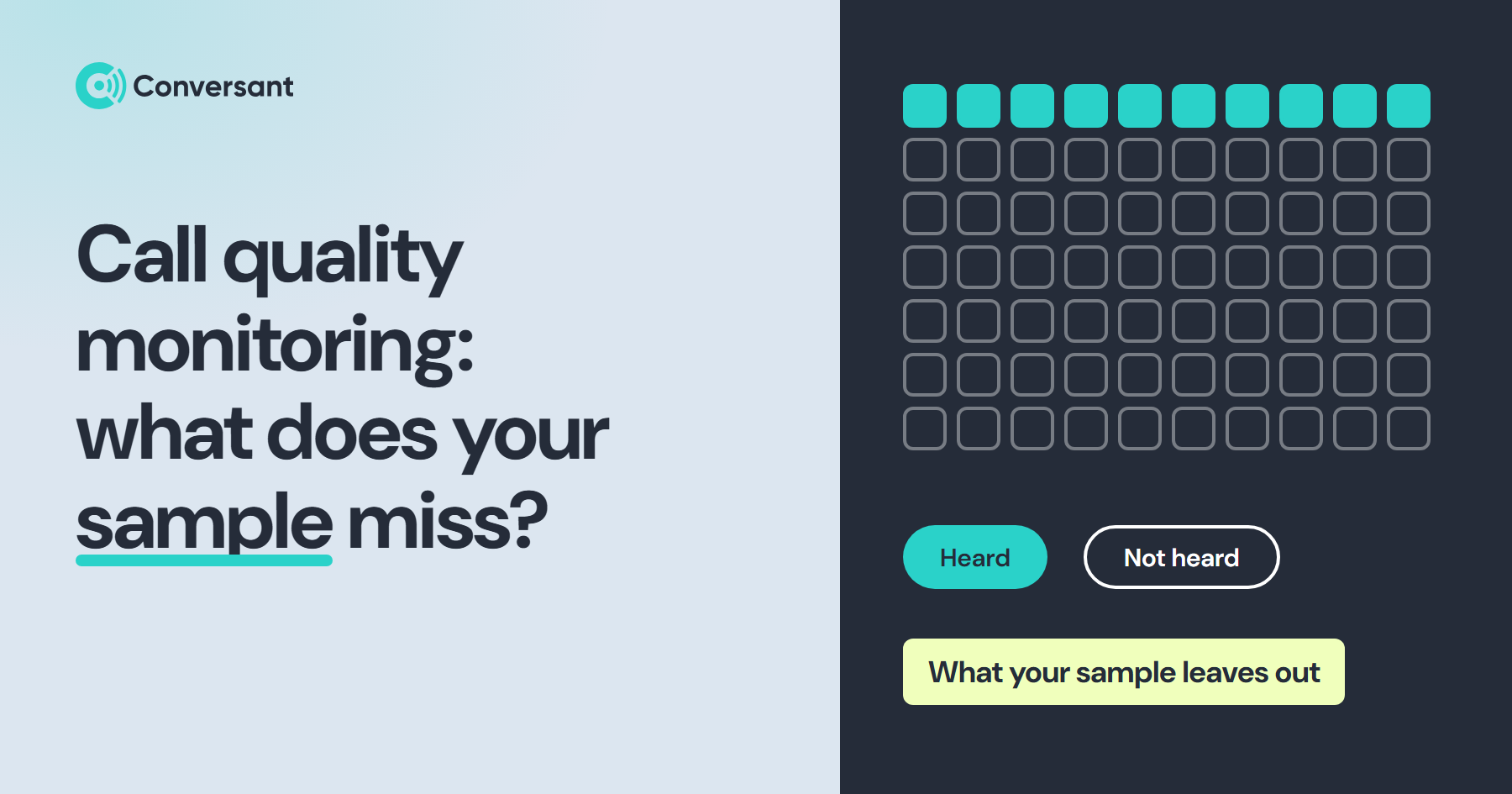
If your team can't listen to all of their calls, a few get picked and the rest go unheard. The calls that turn into complaints may be among the ones nobody had time for.
This is where we'd want AI to sit: alongside the team. It can go through calls nobody has time to listen to and flag the ones that need a person, so an agent or supervisor spends their time on the calls that matter. The person still decides what happens next. A flag starts a conversation, and what to do about it stays with someone who can pick up the phone.
Call 1
Call 2
Needs a person
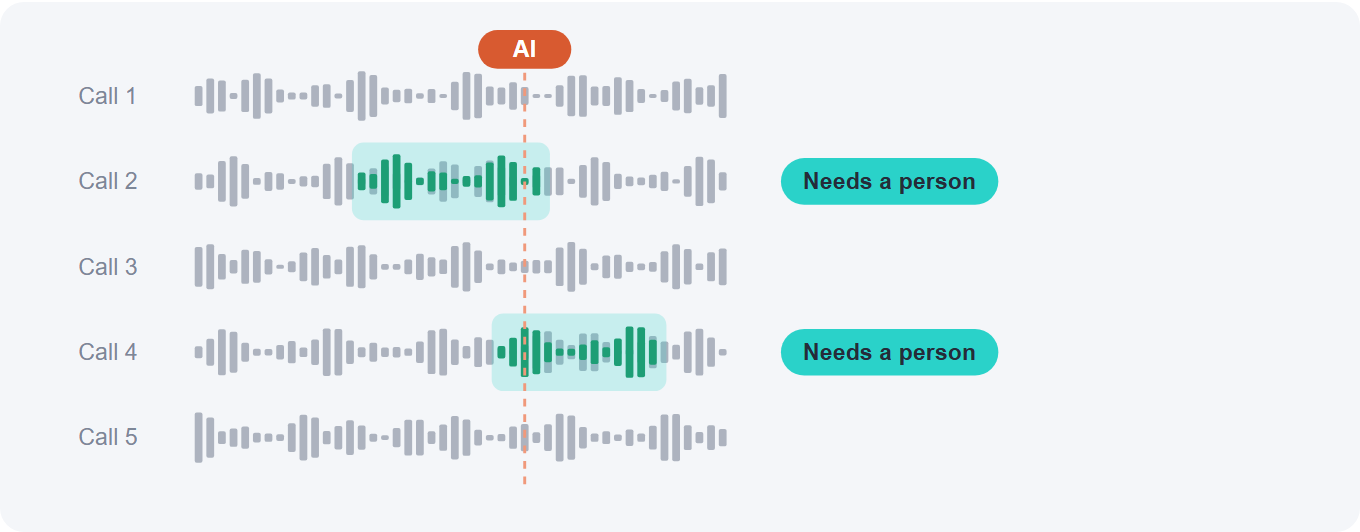
It has limits. AI will sometimes miss things and sometimes flag calls that turn out fine, so someone has to look at what it flags. That's another reason your people need to trust it: they're the ones checking.
Why should the business care whether people use AI?
Because a tool that's bought and switched on hasn't improved anything yet. Three different things get called success in an AI project:
1
In Place
The tool is live and connected.
2
In Use
Your people open it, act on what it shows them and come back to it.
3
Making a Difference
Something has changed for your customers or the business, and you can show it.
It's easy to report on the first and stop there. The third is the one senior decision-makers care about, and adoption is what sits between the two. If the second doesn't happen, the third has nothing to measure.
Which outcomes you track depends on what the tool is for. For AI that flags calls that need a person, you might look at how long it takes to get from a bad call to someone picking it up, how much time your team spends on admin, how your customers rate their experience, and how your team feel about their day. Pick two or three before you start, so you know what "working" means.
Which outcomes you track depends on what the tool is for. For AI that flags calls that need a person, you might look at how long it takes to get from a bad call to someone picking it up, how much time your team spends on admin, how your customers rate their experience, and how your team feel about their day. Pick two or three before you start, so you know what "working" means.
How do you get your team to use AI? Five steps
AI adoption questions
Will AI replace customer service staff?
We can't tell you what will happen across the sector. Just over half of the UK adults in the TUC poll said they were concerned about AI's impact on their job, which is reason enough to be clear with your own team about what a tool is for. Our view is that AI works best alongside people, with the person deciding what happens next.
How do you know if your team is using AI?
Decide before you start. Look at who opens the flags, how quickly someone acts on a flagged call, and whether that changes after three months. If the numbers are low, ask the team why before you add anything.
Where should an AI strategy start?
With the people who'll use it. Ask them what fills their day and what they'd hand over, then pick the first use that helps with that.
So where do your people fit?
The headline will keep running. What your team thinks of it is something you can change, by asking them what they need and building around the answer.
Sources
TUC, "TUC calls for 'step change' in UK approach to AI as poll finds majority of public are concerned over jobs", 27 August 2025. Polling by Survation, July 2025, 2,605 UK adults aged 18+. tuc.org.uk
Bank of England and FCA, "Artificial intelligence in UK financial services - 2024", 21 November 2024. bankofengland.co.uk
Gallup, "AI use at work rises", 14 December 2025. Survey of 23,068 US adults employed full- and part-time, 5-19 August 2025. gallup.com
Bank of England and FCA, "Artificial intelligence in UK financial services - 2024", 21 November 2024. bankofengland.co.uk
Gallup, "AI use at work rises", 14 December 2025. Survey of 23,068 US adults employed full- and part-time, 5-19 August 2025. gallup.com
If you’re working out where AI fits in your customer experience, we’d start with three things: what’s stopping your people using it, how ready your team and processes are, and which opportunities to take first. We’re happy to talk it through.