For years, organisations have measured customer conversations through a narrow lens. A handful of calls were sampled each month, quality scores were logged, and the results were rolled up into reports that told us whether teams were compliant, not whether customers were actually understood.
That approach made sense when conversations were fewer, channels were limited, and analysis had to be done manually. But the reality of customer engagement today looks very different. Customers interact across voice, chat, email, and messaging platforms. Volumes are higher, expectations are sharper, and the signals that matter most are often buried in moments we never thought to listen for.
The way we listen has to evolve.
That approach made sense when conversations were fewer, channels were limited, and analysis had to be done manually. But the reality of customer engagement today looks very different. Customers interact across voice, chat, email, and messaging platforms. Volumes are higher, expectations are sharper, and the signals that matter most are often buried in moments we never thought to listen for.
The way we listen has to evolve.
From Sampling to Understanding
Traditional conversation analysis has always relied on sampling. Listen to 1–2% of interactions, assume they represent the whole, and optimise based on what you hear. The problem isn’t that sampling is wrong, it’s that it’s incomplete.
When only a fraction of conversations are reviewed, patterns emerge slowly (if at all). Emerging issues go unnoticed. Shifts in customer sentiment are spotted late. And insights tend to be retrospective, rather than something teams can act on in real time.
Modern organisations are starting to move away from asking:
“Did the agent follow the script?”
and toward:
“What are customers repeatedly telling us and what does that mean for the business?”
This is a subtle but important shift. It reframes conversations not as transactions to be checked, but as a rich, continuous source of insight.
When only a fraction of conversations are reviewed, patterns emerge slowly (if at all). Emerging issues go unnoticed. Shifts in customer sentiment are spotted late. And insights tend to be retrospective, rather than something teams can act on in real time.
Modern organisations are starting to move away from asking:
“Did the agent follow the script?”
and toward:
“What are customers repeatedly telling us and what does that mean for the business?”
This is a subtle but important shift. It reframes conversations not as transactions to be checked, but as a rich, continuous source of insight.
Conversations as a Strategic Data Source
Every customer conversation contains signals about experience, effort, trust, and intent. Individually, those signals are anecdotal. At scale, they become strategic.
When organisations are able to analyse all conversations, not just a sample, they can:
When organisations are able to analyse all conversations, not just a sample, they can:
- Identify the true drivers of customer frustration and satisfaction
- Detect recurring product or process issues early
- Understand how language, tone, and timing affect outcomes
- Connect frontline interactions to wider business metrics
Crucially, this kind of insight isn’t owned by one team. Operations, CX, product, compliance, and leadership all benefit from seeing the same underlying truth, rather than working from disconnected reports.
Listening at scale turns conversations into shared organisational intelligence.
Listening at scale turns conversations into shared organisational intelligence.
Why “Listening” Means More Than Transcription
It’s tempting to equate progress with transcription alone, turning voice into text and calling it insight. But transcripts are only the starting point.
Real listening requires context:
Real listening requires context:
- What themes are emerging across thousands of conversations?
- Where does sentiment shift during an interaction and why?
- Which issues are increasing in frequency, even if they’re not yet escalations?
- How do conversations differ by channel, team, or customer segment?
Answering these questions demands more than keyword searches or static reports. It requires technology that can interpret language at scale, surface patterns automatically, and present insights in a way humans can actually use.
This is where conversation intelligence is evolving from a quality tool into a decision-making one.
This is where conversation intelligence is evolving from a quality tool into a decision-making one.
Turning Insight Into Action
One of the biggest risks with any analytics capability is insight overload. If teams are presented with dashboards full of charts but no clarity on what to do next, the value quickly erodes.
The organisations leading in this space are focused on:
The organisations leading in this space are focused on:
- Making insights accessible beyond specialist teams
- Linking conversational trends to clear operational or strategic actions
- Enabling faster feedback loops between customers and the business
Listening well isn’t just about hearing more, it’s about responding better.
Where Insights360 Fits In
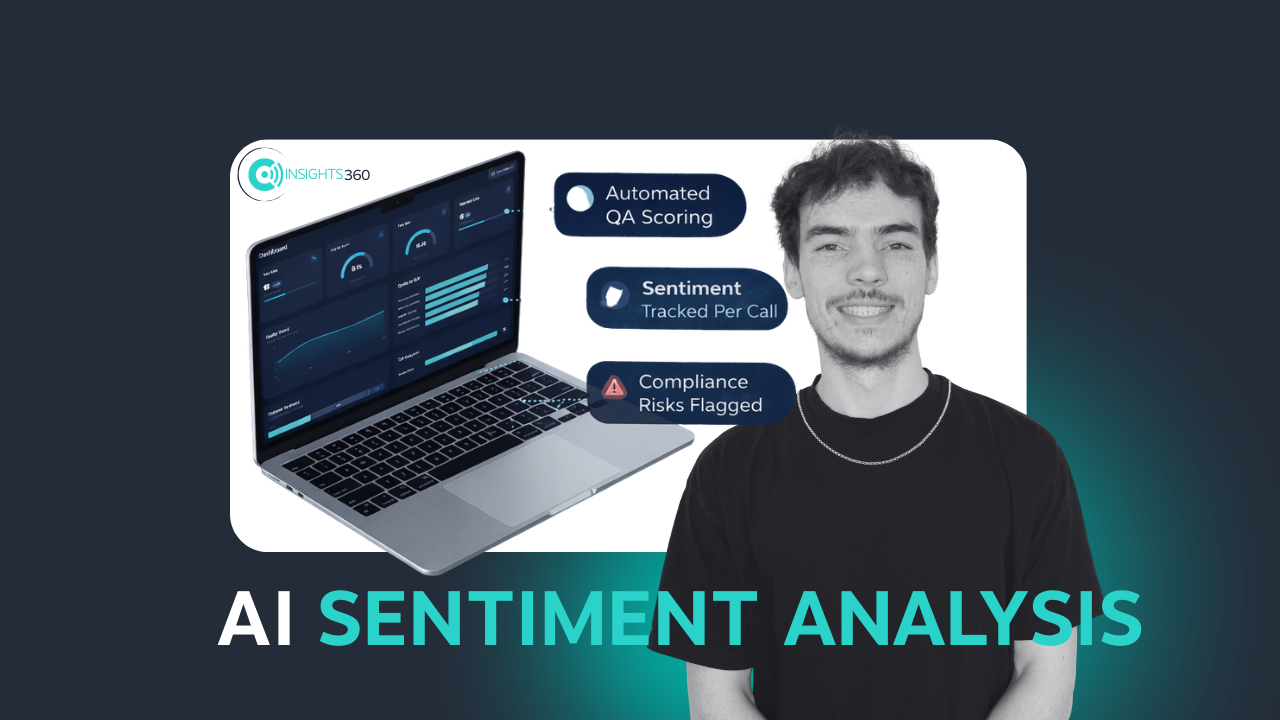
At Conversant, we’ve been watching this shift closely. Insights360 was designed around the idea that customer conversations shouldn’t sit in silos or be reduced to surface-level metrics.
Instead of focusing on isolated interactions, Insights360 looks across conversations to help organisations understand what’s really happening at scale, across channels, over time, and in language customers actually use.
The goal isn’t to replace human judgement, but to support it. By surfacing meaningful patterns and trends, Insights360 helps teams spend less time searching for issues and more time deciding how to address them.
Used well, it becomes a shared lens across the organisation, one that keeps the customer’s voice present in everyday decision-making, not just monthly reports.
Instead of focusing on isolated interactions, Insights360 looks across conversations to help organisations understand what’s really happening at scale, across channels, over time, and in language customers actually use.
The goal isn’t to replace human judgement, but to support it. By surfacing meaningful patterns and trends, Insights360 helps teams spend less time searching for issues and more time deciding how to address them.
Used well, it becomes a shared lens across the organisation, one that keeps the customer’s voice present in everyday decision-making, not just monthly reports.
Listening as a Leadership Capability
The way organisations listen to customers is becoming a marker of maturity. Leaders who invest in better listening aren’t just improving CX metrics, they’re building organisations that learn faster, adapt earlier, and make decisions grounded in real customer experience.
As customer conversations continue to grow in volume and complexity, the question is no longer whether we can listen more closely.
It’s whether we’re ready to act on what customers have been telling us all along.
As customer conversations continue to grow in volume and complexity, the question is no longer whether we can listen more closely.
It’s whether we’re ready to act on what customers have been telling us all along.