
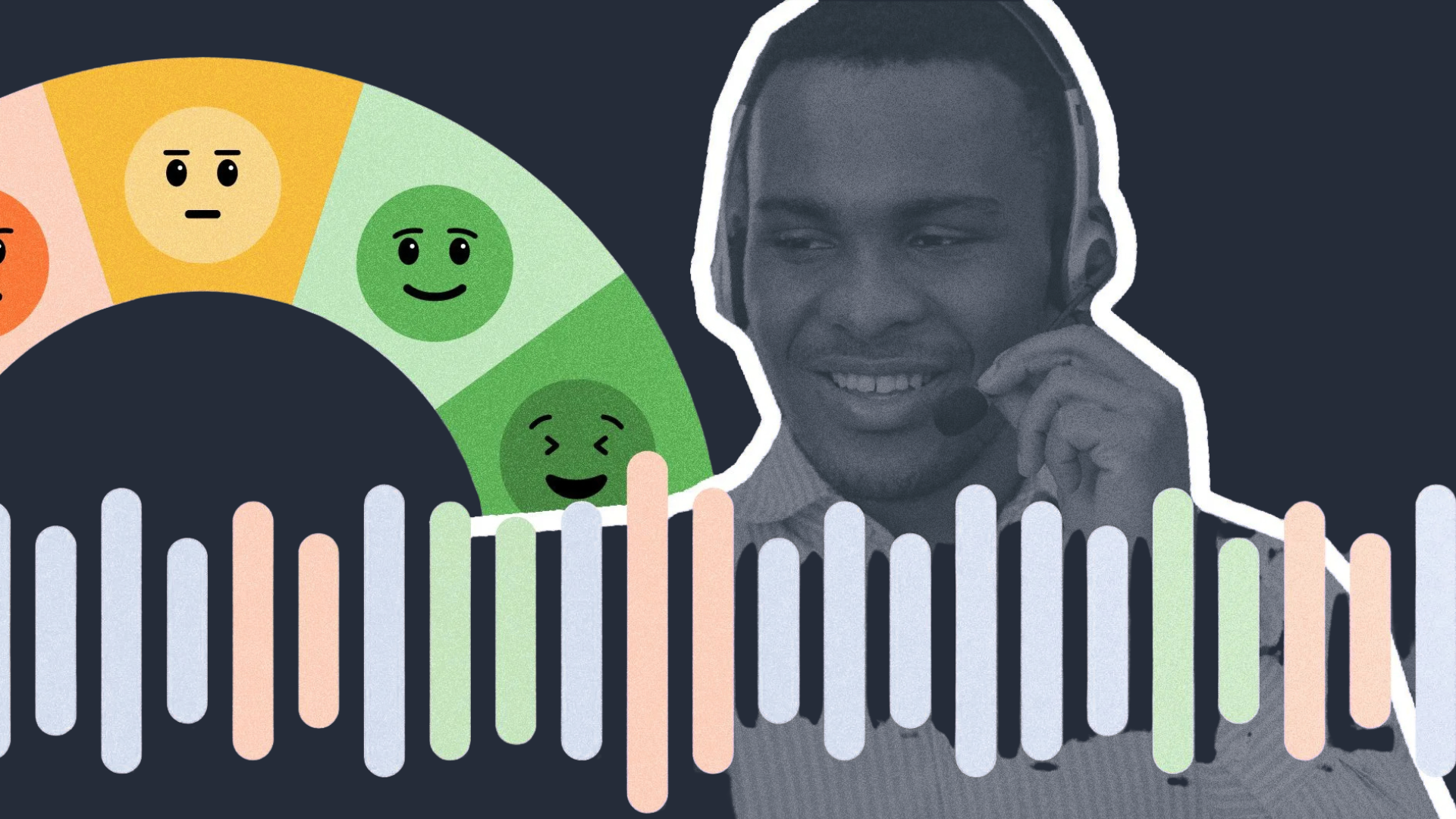
AI risk detection is rapidly becoming essential for organisations that want to identify issues before they turn into complaints, compliance breaches, or customer churn.
Risk rarely arrives without warning.
Missed signals. Subtle behavioural shifts. Patterns hiding in plain sight across calls, tickets, chats and emails. The challenge for most organisations isn’t a lack of data, it’s the inability to connect it quickly enough to act before small issues become serious problems.
This is where AI risk detection changes the equation.
Instead of reacting to escalations, businesses can now proactively identify early warning signs, across 100% of customer interactions and intervene before risk compounds.
Let’s explore how.
Risk rarely arrives without warning.
Missed signals. Subtle behavioural shifts. Patterns hiding in plain sight across calls, tickets, chats and emails. The challenge for most organisations isn’t a lack of data, it’s the inability to connect it quickly enough to act before small issues become serious problems.
This is where AI risk detection changes the equation.
Instead of reacting to escalations, businesses can now proactively identify early warning signs, across 100% of customer interactions and intervene before risk compounds.
Let’s explore how.
The Problem with Traditional Risk Monitoring
Historically, organisations have relied on:
- Manual quality assurance sampling
- Lagging KPIs (complaint volumes, escalations, churn rates)
- Periodic reporting cycles
- Reactive compliance audits
These approaches create two core issues:
1. They’re retrospective. By the time risk appears in a report, it’s already escalated.
2. They’re incomplete. Sampling only a small percentage of interactions means systemic patterns go unnoticed.
In high-volume environments, contact centres, service operations, financial services, utilities, manually reviewing every interaction simply isn’t scalable.
AI risk detection is.
2. They’re incomplete. Sampling only a small percentage of interactions means systemic patterns go unnoticed.
In high-volume environments, contact centres, service operations, financial services, utilities, manually reviewing every interaction simply isn’t scalable.
AI risk detection is.
What AI Risk Detection Actually Involves
AI risk detection goes beyond transcription or simple keyword spotting.
Modern AI models analyse voice and digital interactions at scale to identify:
Modern AI models analyse voice and digital interactions at scale to identify:
- Language patterns linked to vulnerability or distress
- Escalation signals in tone, pace, and sentiment
- Repeated friction points in processes
- Emerging complaint themes
- Compliance gaps
- Agent behaviour trends
- Early indicators of churn
The difference lies in pattern recognition across entire interaction datasets.
Rather than flagging isolated red words, AI identifies clusters of signals, the combinations that suggest risk is forming beneath the surface.
Rather than flagging isolated red words, AI identifies clusters of signals, the combinations that suggest risk is forming beneath the surface.
Three Types of Risk AI Can Identify Early
1. Customer Risk
Customers rarely jump straight to formal complaints. They signal dissatisfaction gradually.
AI risk detection can uncover:
AI risk detection can uncover:
- Repeat contacts within short timeframes
- Increasing negative sentiment
- Language indicating frustration or confusion
- Mentions of switching providers
- Expressions of financial or personal vulnerability
With early visibility, organisations can:
- Proactively reach out
- Escalate cases before they become formal complaints
- Offer tailored support
- Prevent avoidable churn
Early intervention reduces financial, operational and reputational cost.
2. Operational Risk
Processes don’t fail overnight, they deteriorate gradually.
AI can highlight:
AI can highlight:
- Recurring breakdowns across teams
- Inconsistent messaging
- Knowledge gaps driving repeat calls
- Delays caused by unclear ownership
- Friction points within customer journeys
When surfaced in structured, recurring insight cycles, these themes become actionable. Leaders can prioritise improvements based on real interaction evidence rather than assumptions.
3. Compliance & Conduct Risk
Regulated industries face increasing scrutiny around vulnerability, fair treatment and transparency.
AI risk detection enables continuous oversight by identifying:
AI risk detection enables continuous oversight by identifying:
- Missing mandatory disclosures
- Inadequate explanation of terms
- Poor handling of vulnerable customers
- Script deviation
- Behavioural patterns that increase exposure
This shifts compliance from periodic audit activity to ongoing assurance.
Why Speed Is Critical in Risk Management
Risk compounds over time.
A single poorly handled interaction may not be critical.
But hundreds of similar interactions over weeks? That becomes systemic exposure.
AI risk detection provides:
A single poorly handled interaction may not be critical.
But hundreds of similar interactions over weeks? That becomes systemic exposure.
AI risk detection provides:
- Continuous monitoring
- Near real-time theme identification
- Trend tracking over time
- Measurable intervention impact
Instead of discovering issues after escalation, organisations can address them while they’re still manageable.
Turning AI Insight Into Action
AI insight only delivers value when it drives change.
Organisations seeing the greatest benefit from AI risk detection embed findings into their operational rhythm through:
Organisations seeing the greatest benefit from AI risk detection embed findings into their operational rhythm through:
- Targeted coaching
- Process redesign
- Policy updates
- Proactive customer outreach
- Training refinement
- Data-led strategic decisions
When insight becomes structured and recurring, focused on a clear theme each week, risk management becomes proactive rather than reactive.
This kind of disciplined, themed insight approach allows organisations to continuously sharpen how they serve and protect their customers.
This kind of disciplined, themed insight approach allows organisations to continuously sharpen how they serve and protect their customers.
What to Look for in an AI Risk Detection Solution
If you're evaluating AI risk detection capabilities, ask:
- Does it analyse 100% of interactions across channels?
- Can it detect behaviour, sentiment and intent — not just keywords?
- Does it surface trends and emerging themes?
- Can insights be segmented by team, product or journey stage?
- Is it designed for continuous improvement, not just reporting?
The objective isn’t more dashboards.
It’s earlier clarity.
It’s earlier clarity.
Staying Ahead of Escalation
Spotting risk early requires more than dashboards. It requires consistent, structured visibility into what customers are actually saying and how they’re saying it.
That’s where Insights360 comes in.
Insights360 is built to turn everyday customer interactions into clear, actionable intelligence. Using advanced sentiment analysis and interaction analytics, it continuously monitors conversations across voice and digital channels to surface emerging risk signals before they escalate.
Rather than waiting for complaint volumes to rise, Insights360 helps organisations identify:
That’s where Insights360 comes in.
Insights360 is built to turn everyday customer interactions into clear, actionable intelligence. Using advanced sentiment analysis and interaction analytics, it continuously monitors conversations across voice and digital channels to surface emerging risk signals before they escalate.
Rather than waiting for complaint volumes to rise, Insights360 helps organisations identify:
- Shifts in customer sentiment over time
- Escalation patterns within specific teams or journeys
- Language linked to vulnerability or distress
- Repeated friction points driving frustration
- Behavioural trends that may indicate compliance exposure
Because it analyses 100% of interactions, Insights360 doesn’t rely on sampling or assumptions. It identifies patterns at scale, highlighting not just isolated incidents, but systemic themes.
Crucially, Insights360 is designed for ongoing insight cycles. Each week, organisations can focus on a specific theme, whether that’s vulnerability handling, repeat contact drivers, or escalation language, and use AI-driven evidence to guide operational decisions.
This structured approach transforms risk management from reactive investigation to proactive improvement.
Instead of discovering problems after escalation, leaders gain early visibility. Instead of responding to complaints, teams can prevent them.
That’s the power of AI risk detection when it’s embedded into operational rhythm.
Crucially, Insights360 is designed for ongoing insight cycles. Each week, organisations can focus on a specific theme, whether that’s vulnerability handling, repeat contact drivers, or escalation language, and use AI-driven evidence to guide operational decisions.
This structured approach transforms risk management from reactive investigation to proactive improvement.
Instead of discovering problems after escalation, leaders gain early visibility. Instead of responding to complaints, teams can prevent them.
That’s the power of AI risk detection when it’s embedded into operational rhythm.